Sewer Line Repair in Great Kills, Staten Island
When multiple basement fixtures back up simultaneously or persistent wastewater odors permeate your home, an underground sewer lateral issue is likely the cause. We provide precision video camera diagnostics, mechanical root clearing, targeted spot repairs, and pipe restoration tailored specifically to the established residential properties of Great Kills and the South Shore.
Diagnosing Underground Sewer Laterals in South Shore Homes
Underground residential sewer lines across Great Kills face unique environmental conditions. In neighborhoods developed between the 1950s and 1980s—stretching from Amboy Road down toward Hylan Boulevard and Great Kills Harbor—many homes rely on original vitrified clay or cast-iron sewer laterals. Decades of coastal soil settlement, dynamic water tables, and aggressive root systems from mature street trees frequently stress these aging underground pipes.
When a sewer lateral is cracked, bellied, or invaded by root growth, waste flow slows down and wastewater eventually backs up into the lowest drains in the property. Addressing these complications requires systematic diagnostics rather than blind snaking, ensuring that the root structural cause is accurately identified and safely repaired.
- High-Resolution Video Camera Inspection: Locates exact blockages, joint fractures, and pipe collapses.
- Electronic Sonde Depth Mapping: Accurately measures underground depth and position to minimize surface disruption.
- Targeted Trench Spot Repairs: Excavates only the compromised pipe segment when surrounding lines remain sound.
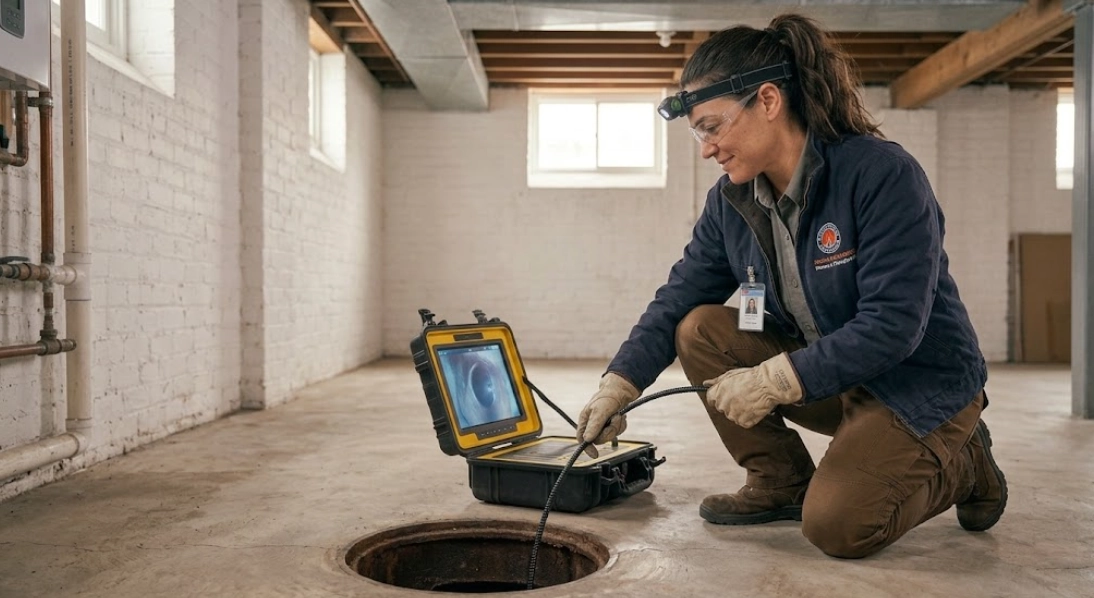
Real-time video diagnostics pinpoint underground cracks, bellies, and root penetrations without blind guesswork.
Common Symptoms of Main Sewer Line Failure
An underground sewer compromise affects the entire plumbing drainage system rather than a single sink or toilet. Homeowners should recognize the unmistakable warning signs indicating that the main line requires urgent diagnostic attention:
Basement Fixture Backups
Wastewater rising in the lowest fixtures—such as basement floor drains, utility sinks, or lower-level showers—whenever upstairs plumbing fixtures, washing machines, or dishwashers run.
Gurgling Drainage Sounds
Bubbling or gurgling sounds emerging from toilet bowls or tubs when another fixture empties, indicating air trapped by an underground wastewater obstruction.
Persistent Sewer Gas Odors
Sulfuric, rotten-egg sewer gas smells near basement floor traps, laundry sumps, or along the front exterior foundation wall where the house sewer exits the building.
Multiple Sluggish Drains
Slow drainage occurring simultaneously across bathrooms and kitchens on different levels, proving the restriction is downstream in the primary collector lateral.
Exterior Lawn Depressions
Unexplained soggy patches, unusually lush green strips of grass, or sinkholes developing along the path between your foundation and the street curb line.
Repeated Line Stoppages
Drains that require mechanical snaking every few months to maintain flow, signaling ongoing tree root intrusion, offset pipe joints, or heavy internal scale buildup.
Understanding Sewer Lateral Responsibility in New York City
Many homeowners assume that their maintenance responsibility ends at their property line or curb. However, under standard New York City Department of Environmental Protection (DEP) regulations, residential property owners are generally responsible for maintaining, cleaning, and repairing the entire house sewer line from the interior building foundation out to, and including, the connection (spur or tap) to the city sewer main under the street.
Because repairs extending past the sidewalk into the public roadway require municipal street-opening permits, strict trench shoring, and DEP-compliant backfill standards, choosing the correct diagnostic path is vital. We thoroughly inspect the lateral to determine whether the failure is located on private property (front lawn or driveway) or within the municipal roadway easement before initiating repair work.
Our Step-by-Step Sewer Inspection and Repair Process
We follow an engineering-guided, step-by-step methodology to ensure that underground repairs are executed cleanly, safely, and with lasting durability:
Main Cleanout Access & Flow Assessment
We locate and open the property's primary sewer cleanout, inspect initial static water levels, and evaluate whether standing water indicates an active full line stoppage or partial obstruction.
High-Definition Color Camera Survey
We feed a professional fiber-optic push camera down the lateral, inspecting pipe interior walls, joints, elbows, and structural conditions in real time while recording high-resolution footage.
Precision Above-Ground Radio Locating
An electromagnetic sonde transmitter built into the camera head transmits a localized radio signal to our surface receiver, allowing us to mark the exact surface coordinates and depth of the damaged section.
Structural Evaluation: Spot Repair vs. Replacement
We review the footage with the homeowner, evaluating whether an isolated excavation and spot repair is appropriate or if advanced corrosion and multi-point collapses warrant a full lateral replacement.
Targeted Repair Execution & Verification
Following proper safety protocols and utility markings (Call 811), we excavate the damaged section, replace compromised piping with heavy-duty schedule-40 PVC or cast iron, install banded shielded couplings, and re-run camera diagnostics to verify 100% unimpeded flow.
When Spot Repair Is the Ideal Solution
Spot repair is recommended when camera diagnostics confirm that the pipe's overall pitch is sound, the remaining run shows clean interior walls, and structural failure is confined to a single localized area. Typical candidates include:
- A single cracked clay bell-and-spigot joint punctured by a tree taproot.
- A localized puncture caused by previous fencing or utility installation.
- A short 4- to 6-foot sagging section surrounded by otherwise stable piping.
When Full Line Replacement Is Necessary
Full sewer lateral replacement is the more prudent long-term investment when the underlying pipe structure has degraded past the point of reliable patching. Common scenarios include:
- Extensive channeling, bottom rot, or structural flaking throughout older cast-iron lines.
- Multiple pipe breaks, chronic bellies (reverse pitch), or shifting across the entire yard.
- Repeated root ingress at virtually every joint along original vitrified clay piping.
Urgent Situations Requiring Immediate Attention
Raw sewage backups pose serious health and property hazards. If black wastewater is actively coming up through your basement drains, stop running all water inside the home immediately (do not flush toilets, run faucets, or operate dishwashers or washing machines). Turn off your primary water supply valve if necessary, keep pets and family members away from the contaminated area, and call our direct line at (315) 202-8009 for immediate diagnostic assistance.
Practical Tips to Protect Your Sewer Lateral
While underground soil movement cannot always be prevented, adopting conscientious plumbing habits significantly extends the operating lifespan of your residential sewer line:
Avoid Flushing Wipes
Even products marketed as "flushable" do not break down like toilet paper and rapidly snag on minor pipe imperfections, catching grease and triggering major clogs.
Never Pour Grease Down Drains
Cooking fats, oils, and grease solidify inside cold underground pipes, coating the interior walls and binding with hair and sediment into rock-hard obstructions.
Schedule Routine Video Inspections
For homes with mature trees near the sewer alignment, a periodic camera inspection every 2–3 years catches early root penetration before catastrophic collapse occurs.
Experiencing Slow Drains or Sewer Backups in Great Kills?
Our experienced technicians utilize advanced video inspection to locate the precise underground defect and restore clean, reliable drainage flow.
Frequently Asked Questions About Sewer Line Repair
How does a video camera inspection pinpoint sewer line breaks without digging up the yard?
A self-leveling, high-definition camera head mounted on a flexible fiber-optic push cable is inserted directly into the main cleanout. Real-time video displays cracked clay pipes, dislocated cast-iron seams, bellied low spots, and root intrusion, while an integrated electromagnetic sonde transmitter pinpoints the exact underground depth and physical location above ground.
Who is legally responsible for sewer repairs between my house and the street in NYC?
Under New York City regulations, residential property owners are generally responsible for maintaining and repairing the entire house sewer lateral from the building's foundation all the way out to and including the physical connection (spur or tap) at the city sewer main under the municipal roadway.
When is an isolated spot repair recommended over complete sewer line replacement?
Spot repair is ideal when camera diagnostics confirm that structural damage—such as a single localized root penetration or crushed joint—is confined to a discrete 4- to 8-foot section while the remaining pipe run remains sound, properly pitched, and structurally intact. If widespread corrosion, severe misalignments, or multiple collapses exist, full replacement is the more reliable long-term solution.
What warning signs indicate my main sewer line is failing rather than an isolated fixture clog?
Warning signs include water backing up into the lowest plumbing fixtures (such as basement floor drains, showers, or first-floor toilets) whenever a washing machine drains or upper-floor toilet flushes, sewer gas odors lingering near foundation walls, gurgling toilets throughout the house, and soggy patches or sinkholes along your front lawn.
Restore Free-Flowing Drainage to Your Great Kills Home
Don't let underground sewer clogs or damaged pipes threaten your finished basement. Speak directly with a local plumbing diagnostic specialist today.