Boiler Repair in Great Kills, Staten Island
Dependable, expert boiler repair Great Kills Staten Island homeowners rely on for fast diagnostic assessments, restored winter heat, and safe mechanical operation. Whether addressing urgent no-heat situations or troubleshooting noisy radiators, our technicians isolate root mechanical causes before starting repairs.
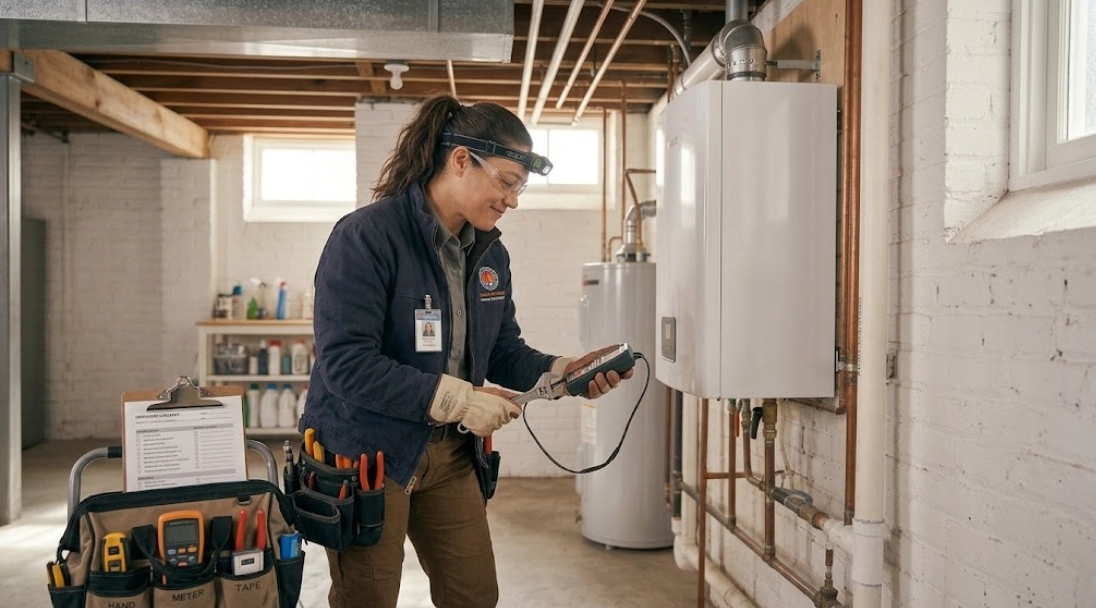
Common Boiler Problems & Warning Signals
Heating failures during cold Staten Island winters cause rapid indoor heat loss and threaten home plumbing with freezing hazards. Watch for these mechanical red flags.
No Heat Boiler Repair Great Kills Staten Island
When a thermostat calls for heat but burners fail to ignite, the issue often stems from a locked-out flame sensor, a tripped low-water cutoff, an open high-limit aquastat, or an electrical ignition module failure. Prompt troubleshooting isolates the control failure quickly.
Steam Boiler Repair Great Kills Staten Island
Single-pipe steam heating systems around Hylan Boulevard frequently suffer from spitting radiator vents, unpitched steam mains, water hammer clanking, or fluctuating sight-glass water levels caused by sediment in the wet return lines.
Hot Water Boiler Repair Great Kills Staten Island
Closed-loop hydronic heating systems depend on balanced pressure and active water circulation. Water pooling around relief valves, pressure gauge drops, or air-bound baseboards indicate expansion tank bladder failures or circulator pump binding.
Heating Infrastructure in Great Kills Homes
From classic detached single-family colonials near Great Kills Harbor to post-war ranches and semi-detached residences, Staten Island's South Shore presents distinct heating conditions.
Gas Boiler Repair Great Kills Staten Island
Natural gas is the primary heating fuel across Great Kills. Modern high-efficiency condensing boilers and traditional atmospheric cast-iron heating plants both rely on precise gas manifold pressures and unobstructed combustion air.
Salt air from Great Kills Harbor and coastal winds can accelerate exterior flue corrosion, cause drafts that trip spill switches, or corrode burner trays over time. If a boiler is not working Great Kills Staten Island residents should never attempt to bypass factory safety controls or adjust gas pressure regulators independently. If fuel odors are present, review our gas line repair and inspection protocols immediately.
Basement Environment & Water Exposure
Many Great Kills homes have basements sitting close to local water tables. Damp sub-grade environments can rust boiler jackets, oxidize electrical aquastats, and submerge burner assemblies during severe storms.
Protecting basement mechanical rooms often involves comprehensive ground water management. Learn how we defend heating equipment through our dedicated sump pump service and flood protection solutions.
Key Mechanical Components We Inspect
Our heating diagnostics systematically assess the critical operating components that govern boiler safety and fuel efficiency:
- Low-Water Cutoff (LWCO): Mandatory safety sensors that shut off fuel if boiler water levels drop, preventing dry firing and cast-iron cracking.
- Pressure Relief Valves: 30 PSI hydronic and 15 PSI steam relief valves designed to discharge excess pressure before catastrophic vessel failure occurs.
- Aquastats & Pressuretrols: Temperature and vapor controllers that regulate operating cycles based on indoor heating demands.
- Circulator Pumps & Flow Checks: Multi-speed circulating pumps that propel hot water through multi-zone distribution manifolds.
If your home also utilizes domestic hot water coils inside the heating vessel, our team troubleshoots domestic supply issues alongside our water heater repair specialists.
Our Comprehensive Diagnostic & Repair Process
We take a methodical approach to heating service, diagnosing root mechanical problems rather than simply applying superficial patches.
- Thermostat & Electrical Interlocks: Verifying incoming line voltage, transformer output (24V), emergency switch continuity, and thermostat switching signals.
- Fuel Delivery & Combustion Controls: Testing gas valve solenoid resistance, pilot spark or hot-surface igniter condition, and flame rectification microamp currents.
- Vessel Integrity & Pressure Dynamics: Inspecting cast-iron section seals for seepage, testing expansion tank air pre-charge, and checking relief valve discharge piping.
- Distribution Balancing & Heat Transfer: Flushing low-water cutoffs, clearing radiator vents, and verifying proper thermal distribution through our steam heat and radiator repair protocols.
Repair vs. Replacement Considerations
Homeowners frequently ask whether an aging boiler should be repaired or completely replaced. We evaluate project viability honestly:
- When Repair Is Appropriate: Replacing wear-and-tear parts like thermocouples, electronic ignition modules, zone valves, relief valves, or circulator pumps on vessels under 12–15 years old.
- When Replacement Is Necessary: Cracked cast-iron heat exchanger sections, deep structural tank corrosion, obsolete replacement parts, or severe seasonal inefficiency. Explore our comprehensive boiler replacement services for modern options.
Project scope and cost depend on physical equipment accessibility, pipe diameter, electrical requirements, and whether municipal heating permits or chimney relining are needed.
Experiencing uneven heating, pilot failures, or no-heat conditions?
Call (315) 202-8009 for Boiler DiagnosticsFull-Scope Heating & Plumbing Services in Great Kills
Comprehensive mechanical support for residential and commercial plumbing systems across Staten Island's South Shore.
Boiler Replacement
High-efficiency boiler sizing, oil-to-gas conversions, modern hydronic system installations, and complete mechanical plant upgrades. Learn more on our boiler replacement page.
Radiator & Steam Heat Repair
Fixing knocking pipes, replacing hissing or leaking steam air vents, repitching sagging cast-iron radiators, and restoring even room temperatures. Visit our radiator repair page.
Water Heater Repair
Troubleshooting gas and electric domestic water heaters, leaking storage tanks, failed heating elements, and indirect water heating coils. Learn more on our water heater repair page.
Sewer Line Repair
Diagnosing recurring main line stoppages, identifying root intrusion with high-definition camera equipment, and performing targeted pipe repairs. Read our sewer line repair guide.
Sump Pump & Flood Protection
Primary submersible sump pump replacement, battery backup systems, check valve installations, and storm flood prevention for basements. Explore sump pump services.
Gas Line Repair & Drain Cleaning
Certified gas piping pressure testing, stove connections, and professional motorized cabling for kitchen and main drains. Review gas line repair and drain cleaning.
Serving Great Kills & Nearby Staten Island Communities
Reliable heating diagnostics and plumbing support across Richmond County's South Shore neighborhoods.
Great Kills
Primary Service CenterProviding dedicated residential heating diagnostics for single-family homes, coastal properties, and multi-family units surrounding Great Kills Harbor, Amboy Road, and Hylan Boulevard.
Bay Terrace
Staten Island South ShoreFast assistance for boiler repair near Bay Terrace (Staten Island), resolving steam distribution imbalances, noisy radiator valves, and baseboard circulator failures.
Eltingville
Immediate Service AreaResponding to boiler repair near Eltingville calls for no-heat situations, pilot ignition dropouts, and hydronic closed-loop expansion tank replacements.
Oakwood
Neighboring CommunityDelivering dependable boiler repair near Oakwood homes, addressing coastal ground water infiltration, boiler basement safety, and winter heating tune-ups.
Arden Heights
Residential CommunitiesDiagnosing multi-zone hot-water heating systems, zone valve motor failures, and domestic water heating equipment throughout Arden Heights planned developments.
New Dorp
Historic South ShoreSpecializing in vintage cast-iron boiler maintenance, low-pressure steam troubleshooting, and main drain clearing across older residential properties in New Dorp.
View detailed neighborhood coverage and local heating guidance.
Explore All Service AreasFrequently Asked Questions About Boiler Repair
Clear answers to common questions about residential heating systems in Great Kills, Staten Island.
What should I check first when my boiler is not working in Great Kills?
Before calling for service, verify that your thermostat is set to HEAT and adjusted at least five degrees above room temperature, confirm the emergency red power switch at the basement stairs has not been switched off accidentally, and check your electrical circuit breaker. For steam systems, inspect the sight glass to see if water has fallen below the low-water cutoff threshold.
How does a steam heating system differ from a hydronic hot-water boiler?
A steam boiler boils water in a cast-iron vessel to generate steam that travels under low vapor pressure (usually under 2 PSI) through pipes to radiators, returning as condensed liquid. A hydronic hot-water boiler heats water without boiling it (usually 160 to 180 degrees Fahrenheit) and continuously circulates it through baseboards or radiators using an electric circulator pump under closed-loop pressure (typically 12 to 18 PSI).
Why is my boiler making loud knocking or banging sounds?
Loud banging in steam systems (water hammer) occurs when condensed water pools in pipes and collides with oncoming high-velocity steam, often due to an unpitched radiator, a waterlogged air vent, or a partially closed supply valve. In hydronic systems, knocking usually indicates boiling in the heat exchanger due to low pressure, heavy limescale buildup, or a failed circulator pump.
When does repairing an older boiler stop making financial sense?
When a boiler vessel develops cracked cast-iron sections, exhibits severe internal corrosion, exceeds 15 to 20 years of age, or suffers repeated seasonal breakdowns that approach the cost of a modern high-efficiency unit, replacing the equipment is usually the more reliable long-term investment.
How often should residential heating boilers on Staten Island be serviced?
Residential boilers should undergo a comprehensive professional inspection and tune-up annually before the heating season begins. This includes flushing sediment from low-water cutoffs, cleaning burner assemblies, testing pressure relief valves, checking chimney draft, and inspecting electrical safety controls.
Need Professional Heating Support?
Speak directly with our Staten Island heating team to describe your boiler's symptoms and coordinate prompt on-site diagnostics. Call (315) 202-8009 today.