Gas Line Repair & Inspection in Great Kills, Staten Island
Residential gas piping fuels boilers, domestic water heaters, heating furnaces, and kitchen ranges across Great Kills. We provide precise electronic leak detection, calibrated manometer pressure testing, shutoff valve replacements, and gas appliance line installations conducted strictly within New York City Department of Buildings and fuel gas safety codes.
Precision Diagnostics for Residential Natural Gas Piping
Natural gas systems in Great Kills homes typically feature black iron threaded piping, corrugated stainless steel tubing (CSST), and dedicated appliance shutoff valves. Over time, environmental dampness in coastal basements, structural vibration, dried thread sealant, or physical impacts can degrade pipe integrity, resulting in micro-leaks or seized shutoff valves.
Because natural gas is highly combustible, any service or maintenance on fuel gas piping requires methodical diagnostic procedures and complete adherence to NYC Fuel Gas Code standards. We never cut corners or leave safety to guesswork: every repair undergoes rigorous leak detection and pressure holding tests before equipment is safely fired.
- Combustible Gas Leak Sniffers: Pinpoints methane concentrations down to parts per million.
- Calibrated Pressure Manometers: Confirms system integrity under positive pressure holding tests.
- Appliance Stopcock Replacements: Installs heavy-duty AGA/CSA-approved brass quarter-turn valves.
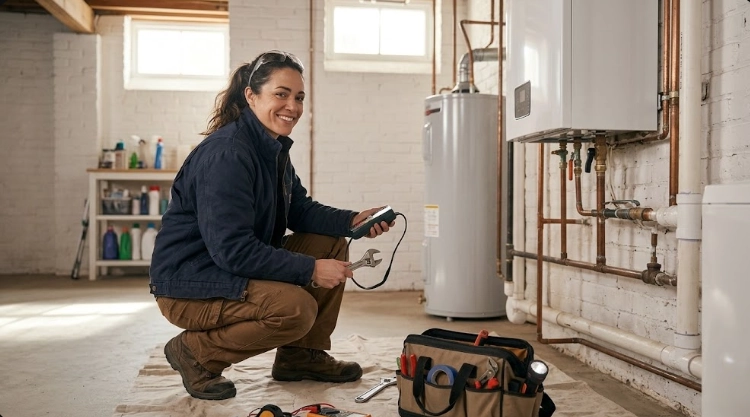
Calibrated digital manometers and gas detection sensors verify zero pressure decay and total system tightness.
Common Gas Line Concerns and Warning Indicators
Gas line issues range from immediate emergencies requiring evacuation to subtle mechanical warning signs that demand prompt professional service:
Faint Odor of Mercaptan
Natural gas is odorless; utilities inject mercaptan to create a pungent rotten-egg scent. Even intermittent or faint whiffs near boilers or ranges indicate an unsealed joint or failing valve.
Audible Hissing or Whistling
A continuous high-pitched hissing or whistling noise along threaded pipe runs or flexible appliance connectors signals pressurized gas escaping under active utility pressure.
Seized or Leaking Gas Valves
Old brass or iron petcock valves behind boilers and ranges that cannot be turned, feel loose, or weep tiny bubbles when tested with leak detection solution require replacement.
Appliance Burner Yellow Flames
Gas boiler or range burners displaying irregular yellow, lazy flames rather than sharp, crisp blue cones suggest incorrect fuel-to-air mixture, dirty orifices, or pressure drops.
Basement Pipe Corrosion & Flaking
Visible surface rust, pitting, or flaking along black iron gas lines running along damp basement slabs or foundation walls threatens wall thickness and structural joint seal.
Utility Shutoff or Red-Tag Notice
If National Grid or the Fire Department locked your gas meter due to a detected leak during an emergency response, certified pressure testing and repair are required before service restoration.
Understanding NYC Local Law 152 Gas Piping Inspections
New York City Local Law 152 (LL152) mandates periodic inspection of exposed gas piping systems in buildings at least once every four years, based on community district schedules.
Who Is Covered? Local Law 152 generally applies to buildings classified under the NYC Building Code as Occupancy Group R-3 with more than two residential units, as well as commercial, institutional, and multi-family residential structures.
Are One- and Two-Family Homes Exempt? Standalone single-family and detached two-family residential homes are typically exempt from mandatory LL152 cyclical inspection filings. However, regardless of exemption status, all residential gas piping must be properly maintained, free of leaks, and compliant with NYC Fuel Gas Code rules whenever alterations, boiler replacements, or line repairs are performed.
Step-by-Step Gas Line Diagnostics, Repair & Testing
Fuel gas service requires precise procedural discipline. We execute every project following an engineering-level safety checklist:
Safety Verification & Atmospheric Sniffing
Before touching tools, technicians survey the area with calibrated combustible gas detectors to verify safe atmospheric levels and confirm no hazardous explosive concentrations exist.
Supply Isolation & Controlled Purge
The relevant gas supply section is isolated at the appliance stopcock or building master gas meter. Residual low-pressure gas is purged safely following ventilation protocols.
Joint Teardown & High-Grade Pipe Fitting
Compromised black iron pipe nipples, elbows, or seized valves are disassembled. New schedule-40 black steel fittings and CSA-certified gas ball valves are installed using fuel-gas-approved anaerobic thread sealant.
Calibrated Manometer Pressure Decay Test
The isolated piping assembly is capped and pressurized with compressed air or inert gas to code-specified test pressure (typically 3 PSI for low-pressure systems, or higher depending on code requirements). The test is monitored via a calibrated digital manometer to verify zero pressure decay over the required holding duration.
Gas Reintroduction & Bubble-Leak Verification
Gas service is reintroduced slowly. Every newly installed joint and connected appliance flex line is thoroughly tested with high-viscosity bubble solution and electronic sniffers before equipment pilot ignition.
Essential Safety Reminder for Property Owners
Never attempt DIY gas line repairs, never use open flames or matches to search for gas leaks, and never attempt to bypass gas appliance safety controls, thermocouples, or pressure regulators. Natural gas systems must be serviced exclusively by qualified professionals equipped with calibrated detection instruments.
Need Gas Appliance Connections or Pressure Testing in Great Kills?
From boiler gas shutoffs to stove line installations and gas line pressure diagnostics, connect directly with our local team.
Frequently Asked Questions About Gas Line Repair & Inspection
What should I do immediately if I smell gas in my home?
Evacuate everyone from the building immediately. Do NOT touch any light switches, electrical appliances, or doorbells, and do NOT attempt to locate the leak. Once safely outside and well away from the building, immediately call 911 or National Grid's 24/7 gas emergency line at 1-718-643-4050.
How is a gas piping leak pinpointed and tested safely?
After emergency safety conditions are stabilized, professional technicians utilize calibrated combustible gas leak sniffers (detecting parts-per-million methane concentrations) and non-corrosive bubbling detection solutions along joint threads. To verify complete system tightness, the system is isolated and subjected to an air pressure test monitored by a sensitive digital or mercury-gauge manometer.
Does NYC Local Law 152 apply to single-family homes in Great Kills?
Under NYC DOB regulations, Local Law 152 periodic gas piping inspections generally apply to buildings classified in Occupancy Group R-3 with more than two residential units, as well as multi-family and commercial properties. Single-family and detached two-family homes are typically exempt, though verifying your specific DOB building classification is always advised.
Can an old gas valve behind my boiler or stove be replaced without shutting down the entire street main?
Yes. Most residential properties feature a dedicated master gas meter shutoff valve inside the basement or outside the foundation. By closing this valve and purging residual pressure from the house line, technicians can safely remove and replace corroded appliance stopcocks, ball valves, or flexible stainless steel connectors.
Schedule Professional Gas Line Inspection in Great Kills
Whether updating appliance piping, replacing a frozen shutoff valve, or testing system tightness, speak directly with our team.